Village Historian
Preserving and sharing the history of Fonda — connecting residents and visitors with the people, places, and events that shaped our community.
Beverly Guiffre, Village Historian
The Village Historian helps preserve and share Fonda's history, connecting residents and visitors with the people, places, and events that have shaped our community.
Beverly Guiffre serves as Village Historian, supporting understanding of Fonda's heritage through historical research, community participation, and sharing local knowledge. Her involvement has included welcoming Fonda descendants and helping them explore their connection to the Village. Beverly has led guided tours of Fonda, highlighting the historical significance of different locations throughout the Village.
Preserving and Sharing Our History
The historian's role includes researching and interpreting local history, encouraging the preservation of historical materials and landmarks, supporting educational activities, and participating in historical commemorations and community events.
Photographs, documents, family recollections, and other historical materials help tell the Village's story. Preserving these connections allows future generations to better understand Fonda's heritage and its place in the Mohawk Valley.
Historical Inquiries
For inquiries about Village history or to discuss historical materials related to Fonda, please contact the Village Office at 518-853-4335 so we can direct your request to the Village Historian.
History of the Village of Fonda
Located along the Mohawk River in Montgomery County
Located along the Mohawk River in Montgomery County, the Village of Fonda has a history shaped by Indigenous heritage, early settlement, the American Revolution, transportation, agriculture, and community life.
Early History and Caughnawaga
Long before the Village's incorporation, the surrounding area was home to the Mohawk people, whose communities were central to the Mohawk Valley. The name Caughnawaga remains closely tied to the area's early history and still identifies historic places within the community.
European settlement developed during the eighteenth century. Farms, trading establishments, churches, and businesses gradually formed the community that would become Fonda.
Douw Fonda: The Village's Namesake
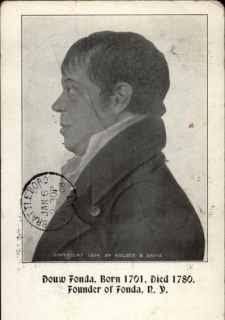
The Village is named in honor of Douw Fonda (1700–1780), an early settler, farmer, and trader traditionally recognized as a founder of the community.
Born in Schenectady, Douw moved with his family to the Caughnawaga area around 1750–1751. His home and trading activities were near the Mohawk River, close to the present-day fairgrounds and racetrack. The Fonda family became closely connected with the settlement's development.
On May 22, 1780, during the American Revolution, Douw Fonda was killed in a raid led by Sir John Johnson. His home was plundered and burned, and his sons John and Adam were taken prisoner and transported to Canada. The Village's name preserves his connection to the community and its Revolutionary War history.
Becoming the County Seat
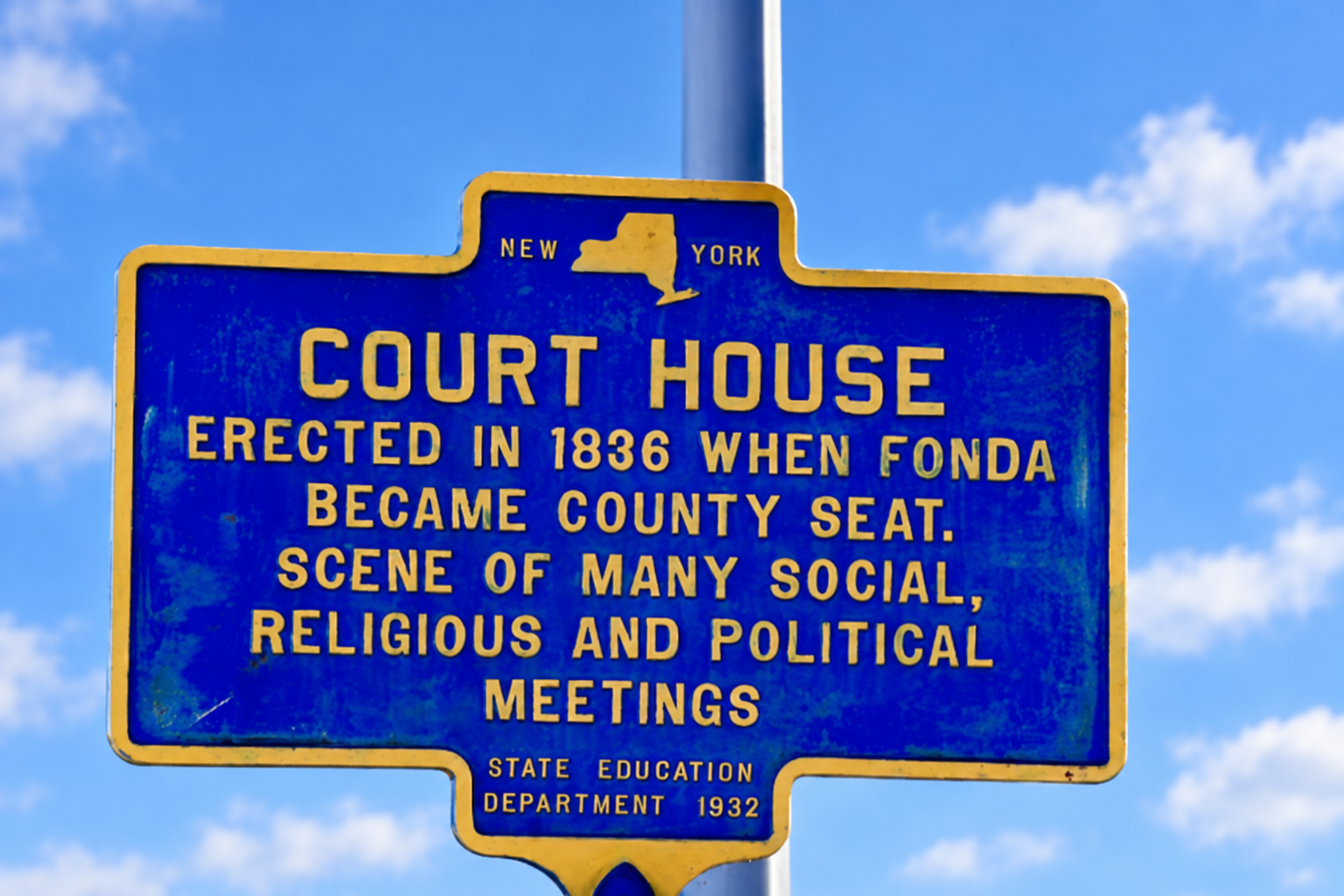
Fonda became the seat of Montgomery County government in 1836, replacing Johnstown. Its location in the Mohawk Valley transportation corridor, including access to the Erie Canal and developing railroad connections, helped establish its importance as a center of government and commerce. The Old Montgomery County Courthouse remains a prominent reminder of that history and now houses the Montgomery County Department of History and Archives.
Incorporation in 1850
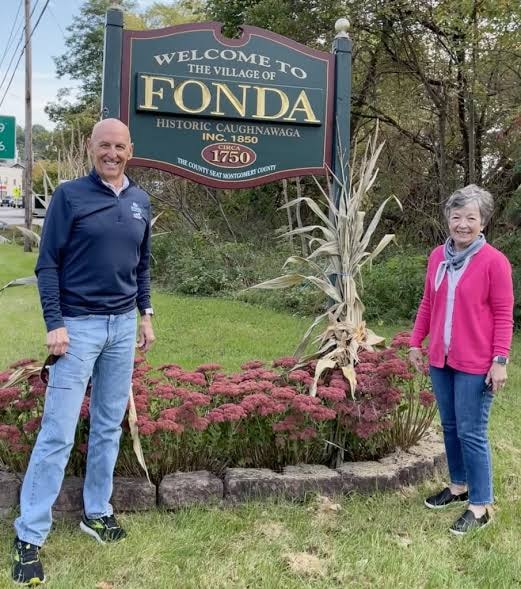
The Village of Fonda was incorporated in 1850 following a petition to the Court of Sessions. According to the Village's historical account, the incorporation order was confirmed at an election held on October 4, with 78 votes in favor and 3 opposed. The newly incorporated Village encompassed 312 acres. Incorporation established a formal village government to serve the growing community.
A Continuing History
Fonda's history includes generations of families, local businesses, places of worship, public institutions, and community traditions. Its historic buildings, cemetery, photographs, documents, and personal recollections preserve connections to that past. The Village Historian helps research, preserve, and share these connections so that residents and visitors can better understand the community and the people who shaped it.
The Old Fonda Courthouse and Montgomery County Historical Society
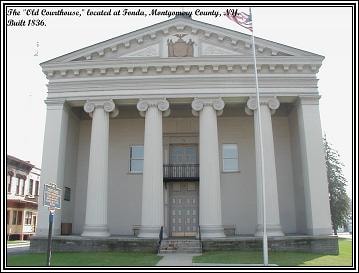
The Old Montgomery County Courthouse, built in 1836 when Fonda became the county seat, stands at 9 Park Street in the heart of the Village. The neoclassical building — with its distinctive columned facade — served as the center of county government and hosted many social, religious, and political gatherings throughout the nineteenth century.
Today, the Montgomery County Department of History and Archives is housed here, where it preserves and provides access to historical records, photographs, maps, and documents about Montgomery County and its communities. Researchers, genealogists, and anyone curious about local history are welcome to visit.
Montgomery County Department of History and Archives
9 Park Street, Fonda, New York 12068The archives are open to the public for research visits. To plan your visit, you can schedule an appointment online or explore the department's collections and resources on their website.
Contact the Village
Historical inquiries may be directed to the Village Office, which will forward them to the Village Historian.
Village of Fonda8 E. Main Street, P.O. Box 447Fonda, New York 12068
518-853-4335